


Every time we decide to tackle a DIY project, it turns into something much bigger than we initially planned. Like the time we attempted to install a simple shelf in the living room, only to discover the drywall was crumbling and needed replacement. Or when we tried changing a light fixture in the hallway and uncovered faulty wiring that required an electrician. These unexpected surprises have become the norm for us. That’s the reality of living in a house with poor construction—what starts as a simple update quickly snowballs into a full-blown renovation. But there’s one project that stands out as our most ambitious DIY undertaking to date.
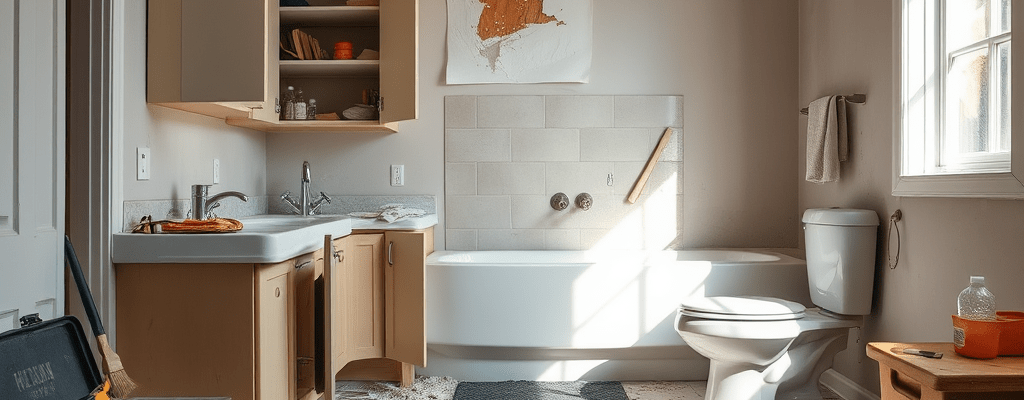
It all started with what we thought would be a quick and easy bathroom update. Our plan was to repaint the cabinets, replace the countertops, and install a new backsplash. Nothing too extreme, right? Well, that’s what we thought—until we started removing the old materials.
The first problem we discovered was that the cabinets weren’t properly secured to the walls. They were barely hanging on, and some had started pulling away. Instead of just painting them, we had to remove and replace the cabinets entirely. But that wasn’t the worst of it.
As we pulled up the old countertops, we noticed a slope in the floor that we couldn’t ignore. After further inspection, we realized that the subfloor was uneven due to years of settling and—surprise!—shoddy construction work. What should have been a simple refresh turned into a structural repair job. We had to tear out parts of the flooring, reinforce the joists, and install a new subfloor before we could even think about putting in new countertops.
Then came the walls.
Removing the backsplash revealed that the drywall behind it was in terrible shape. Large sections had to be replaced, and while doing that, we found electrical wiring that wasn’t up to code. That meant another unexpected step—bringing in an electrician to rewire parts of the bathroom for safety.
What was supposed to be a weekend project turned into a months-long renovation. Unexpected delays piled up as we encountered one issue after another—faulty wiring that required professional intervention, uneven floors that demanded extensive leveling, and walls that needed to be completely rebuilt. The constant setbacks tested our patience and stretched our budget, forcing us to learn new skills on the fly and adapt our plans repeatedly. We learned so much along the way, from installing cabinets properly to laying down new flooring and working with drywall. It was frustrating, exhausting, and way beyond what we had planned—but in the end, we created a bathroom that was both beautiful and structurally sound.
While we laugh (and sometimes groan) about how much work we had to do, we wouldn’t trade the experience. This project has completely changed our approach to DIY work—we now take extra time to plan, expect unexpected setbacks, and always budget for more than just the surface-level fixes. We’ve learned that patience and flexibility are just as important as the tools in our hands, and while we still love tackling projects, we do so with a newfound respect for the process. Every DIY project we take on teaches us something new, even if it means doing way more than we expected.
Key Lessons Learned:
- Always expect the unexpected when working on a home with poor construction.
- Plan for extra time and budget to accommodate unforeseen issues.
- Structural integrity should always be a priority before cosmetic upgrades.
- Learning new skills and staying adaptable can make any DIY project more manageable.
 Small Town Girl